
Lemonade Sing Song 27 June 2-3pm in the Woodside Imperoyal Chapel
Join us for a lovely afternoon of song and celebration and a delicious glass of lemonade to refresh the pipes!

Lemonade Sing Song 27 June 2-3pm in the Woodside Imperoyal Chapel
Join us for a lovely afternoon of song and celebration and a delicious glass of lemonade to refresh the pipes!
Please join us for our end season BBQ here at Cole Harbour Woodside United Church! Come one come all!!
Saturday 22 June 5:30pm, sign up sheet in the Narthex or contact the office for more details 902-434-7714 or email chwuc@eastlink.ca


For the second post today, we consider what it might mean to “reach out through community events”. This is week 7 in our 9 week blog series about ways to connect our church with the wider community. These posts are inspired by the work of Robert Crossman, Ann A. Michel, Kim Mitchel, and Lovett H. Weems, Jr., as found in the article https://www.churchleadership.com/50-ways/50-ways-to-take-church-to-the-community/from the Lewis Centre for Christian Leadership.
This section has 9 ideas to consider. I wonder how we might think about this in our context here at CHWUC. Please know that I would be thrilled to talk about any of these ideas in this series with any of you anytime while I am still working at the minister of Spiritual Care here. The thought from the original article appears in blue, with my commentary underneath as it applies to us in our context at CHWUC.
“Reach out through community events”
Step 26. Plan “bridge events” designed explicitly to draw people from the community by providing for them something they need or enjoy — block parties, free concerts, seasonal events, parenting classes, sports camps, or school supply giveaways, etc. Source: Get Their Name by Bob Farr, Doug Anderson, and Kay Kotan (Abingdon Press, 2013)
We have a huge parking lot on the corner of a very busy road! There is so much we could do in this space! We also have access to the wonderful Salt Marsh Trails and Rainbow Haven Beach so very close by. How exciting would it be to host something like a free family fun day complete with games, those blow-up castles etc., and a BBQ. And what about a Free Concert with some great local talent outside? I strongly recommend the book listed above as a resource to get started on as any group starts to think about ideas like this. This kind of annual event can become a cornerstone to building the church’s involvement in the community.
Step 27. Hold these events off church property or outside the church walls in venues where people feel comfortable and naturally congregate.
See above – with the beach and the trail close by we have lots of options. It’s great to host stuff in places where others feel most comfortable. Sometimes we think we have to host everything inside the church, but sometimes that is a barrier for folks who have never been inside a church or were hurt last time they were in one. Coming into our home may make them uncomfortable, but meeting us on common ground may provide just the welcoming atmosphere required for developing relationship!
Step 28. Get the word out through a well-planned publicity campaign.
In this age, there is no reason for people not to know about anything through word of mouth and social media. While it is true that not everyone has a computer, it is true that everyone knows someone who does. Sharing news about events and celebrations that our church is hosting is the NUMBER ONE FREE way to let people know about us. Another way is through inviting the media to know about what we are up to and what interesting and innovating things we may be doing – if we are doing them. In this age of bad news stories, there are plenty of outlets looking to report some good news!
Step 29. Encourage church members to invite their friends and neighbors. It is less threatening for them to invite someone to a community event than to worship.
Too many of us are shy or even ashamed to share, but if we want our church communities to be meaningful and relevant to the community around us then we have to be bold in sharing what we are up to. Sometimes our church lives are our best kept secret. Ask yourself, “why would anyone want to be a part of something you’d rather not talk about”? Start sharing and intentionally inviting people to YOUR church!
Step 30. Avoid explicitly religious themes: no preaching, prayers, pressure, or financial appeals that might turn people off or reinforce negative stereotypes about church.
Reaching out into the community is about the community, not about the church. This is an opportunity to PRACTICE WHAT WE PREACH, not an opportunity to preach. If folks feel inspired to take part in worship after we show them love then that is up to them and the Holy Spirit. But, the true nature of this work is about reaching out and loving our neighbour as Jesus commanded us to do.
Step 31. Remember, the event itself is not the purpose. The purpose is to meet people where they are and build relationships. Mingle. Get to know people.
I have seen this before. Church folks plan an event and invite the community and the community comes and the church folks are too busy in the background or talking to each other to engage those they invited. We have to start thinking about church as our house. Imagine inviting people into your home and never engaging them in conversation, but staying in the kitchen the whole time and just hoping they enjoy the food? That’s no fun for anyone and certainly doesn’t build relationships. We are called to be braver than that. It’s time to make some new friends!
Step 32. Have a well-trained hospitality team. Make sure guests are enjoying themselves and know their attendance is appreciated.
Let’s say that again, “a well-trained hospitality team” – some call this a “welcome committee” – whatever you call it, it matters. Taking the time to train people to be intentional with our welcome and ensuring guests’ needs are being met makes it even easier for those not “working” on the team to engage more casually. This team can help wrangle the other church folks in attendance too and encourage them to engage with our guests!
Step 33. Gathering people’s names and information about them will permit follow up to those for whom it is appropriate.
Having someone walking around asking if folks would like to be on our mailing list is so easy. It’s an invitation not a requirement. Such a clipboard should not be at the entrance on a table as if it is an expectation or part of registration. Someone friendly who mingles and asks is more welcoming and more in line with what this is about. It can’t be pushy. It’s about a way to stay connected, not sell anything to anyone. The person collecting these contacts should also have a card (or better yet, a magnet) with the church’s contact information to hand out to everyone they talk to.
Step 34. Invite those who attend community events to another event — sometimes called a “hand off event” — planned to draw them into a deeper relationship.
This is a really important thing to consider when planning community events. All events should include follow-up ideas and dreams for what’s next so that those who attend can get excited about coming to the next thing! Never think of events as one-offs or “ifthis one works out we will tryso-and-so”. Always have a plan with the assumption that your event will be a success. Never plan for your event to fail! It might, but a positive attitude is never wasted.
Next week’s post is considering ideas to “Extend your congregation’s spiritual presence beyond church walls”.Until then, get talking to each other about this stuff. If you’ve read this, share it with someone at church and get a conversation going.
Offered in the Peace of Christ,
Rev. Kim Curlett
Minister of Spiritual Care


June 5, 2019
This is the first of two posts today (June 12, 2019). Last week I was working from home as I wasn’t feeling well and somehow failed to post this!
As we continue to work our way through 50 ways to connect our church with the wider community, we turn to thinking about what it means to “Turn Your Existing Ministries Outward”. These posts are inspired by the work of Robert Crossman, Ann A. Michel, Kim Mitchel, and Lovett H. Weems, Jr., as found in the article https://www.churchleadership.com/50-ways/50-ways-to-take-church-to-the-community/from the Lewis Centre for Christian Leadership.
So, let’s consider the following three ideas (The thought from the original article appears in blue, with my commentary underneath as it applies to us in our context at CHWUC).
“Turn your existing ministries outward”
Step 23. Challenge each church group with an inside focus to find a way to become involved with the community outside the church. A choir might sing at a nursing home, or trustees could sponsor a neighborhood clean-up.
Consider, what activity outside the church walls would best align with my church group’s passions and work to serve some need in the community? I love the two ideas above, but what other ideas could the groups at CHWUC come up with beyond these two? Do you have an idea you would like to share? Be brave – start something!
Step 24. Extend recruiting and advertising for church groups and events to audiences beyond your congregation. For example, recruit for choir members in a local paper or community list serve.
Great example! – we have a wonderful choir at this church with an amazing director and world class accompaniment. Have we advertised for new choir members beyond our walls? What other wonderful groups do we have happening here that we might want to invite others to outside of Sunday morning?
Step 25. Build relationships with those taking part in existing programs that serve the community, such as ESL classes, food pantry or clothes bank users, daycare families, etc.
We have a few things that run in this space that are not “church” activities. Have we engaged parents from the daycare or families from the guiding programs? Or what about the folks that come to our food bank? Have we intentionally engaged in conversation with those folks about how we might be in relationship with each other in new and mutually beneficial ways?
Lots to think about in these three short steps. Check out the next post that engages us in thinking about “Reach out through community events”. It is a much longer section and I think are really valuable steps to taking this kind of work to the next level!
Until then, get talking to each other about this stuff. If you’ve read this, share it with someone at church and get a conversation going.
Offered in the Peace of Christ,
Rev. Kim Curlett
Minister of Spiritual Care
Camp Kidston is looking for any volunteers able to help this Saturday June 8th get the camp ready for the summer season. If you haven’t had the chance to go to camp, it is wonderful place to spend the day. If you have friends able to lend a hand please bring them along. All are welcome. You can either reach out to Lee Warren, or to the camp directly on Facebook to let them know you will be there. Thanks!
Cole Harbour Cares received word in April that the family of Ziad, Israa, Jana, Mona and Mahmoud had cleared all their interviews and security checks and were scheduled to arrive in Halifax on May 17th 2019.
First order of business was to find a 3 bedroom apartment which proved to be almost impossible. There is a terrible shortage of suitable apartments in Halifax/Dartmouth area and we were very fortunate to hear of one becoming available on Portland Street in Dartmouth on May 1st. Thanks to the generosity of many people, we were able to fully furnish the apartment prior to the family’s arrival.
It was a stressful time leading up to May 17th because we were not sure if the Lebanese authorities would allow the family to leave but when we heard they were on an Air Canada flight from Istanbul to Toronto we started to celebrate.
There were 20 Cole Harbour Cares members and 7 or 8 children waiting for the family to arrive. Words cannot describe what a joyful feeling it was to see them come through to the arrivals lounge at Halifax airport. Their smiles said everything.
They are starting to settle in. They understand most of what we say and they are very keen to learn English. They now have a bank account and Nova Scotia documentation. Jana and Mona are ready to start attending Hawthorne school at the end of May. Ziad and Israa will be going for English testing at ISANS and will be assigned an appropriate English level in the near future.
Ziad is eager to start working at Station 1 restaurant in Tacoma. Please pop in and see him. He loves to meet all his new Canadian friends.
Cole Harbour Cares members are visiting the family regularly to help them learn conversational English.
Thank you to all our many supporters. We know you kept the family in your hearts and prayers. They are so grateful for another chance at life and so happy to finally be living in Canada


I’m back in the office today at Cole Harbour Woodside United Church (CHWUC) after a beautiful, challenging, and Spirit-filled week at Regional Meetings in Sackville, NB. As we continue to work our way through 50 ways to connect our church with the wider community, we turn to thinking about what it means to “Build Authentic Relationships”. These posts are inspired by the work of Robert Crossman, Ann A. Michel, Kim Mitchel, and Lovett H. Weems, Jr., as found in the article https://www.churchleadership.com/50-ways/50-ways-to-take-church-to-the-community/from the Lewis Centre for Christian Leadership.
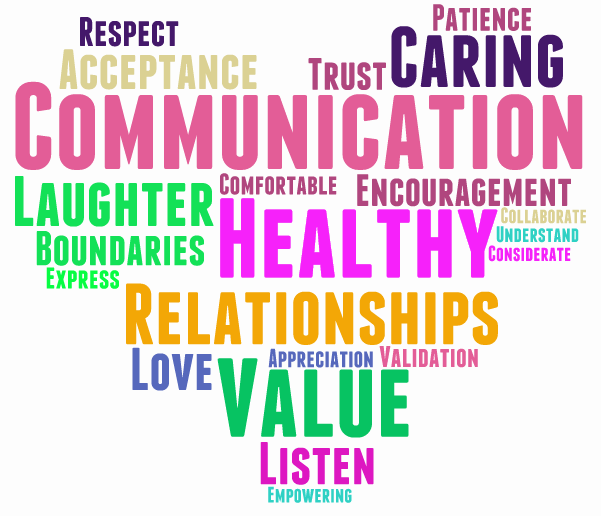
This section of considerations builds on the previous 18 ideas, but here we begin to dig a little deeper and talk about more than just “us” as a congregation and “them” as the community beyond our walls. We begin to seriously consider what it means to think about an “us” as both these entities truly coming together. That’s the word “relationship” by definition – two or more things connecting, coming together in some way. So, let’s think about how we can build those connections in ways that are genuine and true. (The thought from the original article appears in blue, with my commentary underneath as it applies to us in our context at CHWUC).
Step 19. Strive for meaningful engagement with others, not superficial gestures.
If we truly seek to be in relationship with the community outside the walls of our physical structure it requires more of us than being simply familiar with one another. The difference is between being a friend and being an acquaintance. An acquaintance is someone who you recognize and might say “hello” to in the grocery store, for example, but a friend is someone who you would stop and engage in conversation! And why would we engage in conversation with a friend? Because we really care about them beyond the level of basic human respect – we deeply care for their well-being and they care for ours. We are interested in each other’s joys and sorrows and we connect at the level that allows us to be truly empathetic to each other’s needs.
Step 20. Make sure you are reaching out to people for the right reasons. If your motive is simply to get them to come to church, people will see right through to it.
I think this point speaks for itself, but let me reiterate what I stated in another post on this topic: “While new membership may be a wonderful side effect of being good disciples by loving God and loving our neighbour, our only goal ought to be to love unconditionally. Ask yourselves, “If we serve in our community and nobody new comes to church, would we feel we wasted our time?” If so, don’t bother. Return to the drawing board. Do not pass go. Do not collect $200! God doesn’t call you to fill the church pews. God calls you to love and serve others. Period.” I hold firm to this assertion. It is disingenuous to enter into a relationship with our neighbours if our goal is for them to join “us” as opposed to our goal being to simply be in a mutual relationship.
Step 21. Maintain appropriate boundaries, and respect all with whom you engage.
Ah, boundaries! The first thing that we must understand about boundaries are that they are not walls. Boundaries are not there to keep other people out or ourselves in but serve, in this case, to provide and protect our understanding and respect in relationship with one another. If we do not learn each other’s limits we only find out what they are when we trespass against them. Ideally, in healthy community relationships we do the work of learning what is acceptable behavior around communication, connection, space, marketing, professionalism, interpersonal dynamics and more. This takes patience, compromise, and time, but with dedication and respect for one another that transcends the need to be right, healthy boundaries will be established that help all of us navigate the challenging journey of relationships. Healthy boundaries = healthy relationships.
Step 22. Collaborate with others who are also passionate about the community. Don’t reinvent the wheel if you can partner with someone else serving the community.
This stems back to getting to know your community that we discussed a couple of weeks ago. We’ve just discussed that authentic relationships require a lot of work and time – all worth it, but still require a lot of energy, so the best use of our time and energy is to connect to those that we identify as having similar passions and goals in the community that we go. Who else is out there doing the work that we are passionate about too? How can we help them? Do they want our help? Social media is a great place to start asking these questions and see who is out there! Be brave, ask if you can get together and work together. They may not want our help or input, but we will never know until we ask. We might be surprised at the beautiful, unexpected relationships that develop when we take a chance and work with another group!
Stay tuned for next week when we discuss “turning our existing ministries outward”. Until then, get talking to each other about this stuff. If you’ve read this, share it with someone at church and get a conversation going.
Offered in the Peace of Christ,
Rev. Kim Curlett
Minister of Spiritual Care

